About All Tours Airboat ToursBoat ToursFrom Fort LauderdaleFrom Miami ToursKayaking ToursAlligator ToursEco ToursPrivate Tours Directions Hours & Fees
Find Tours 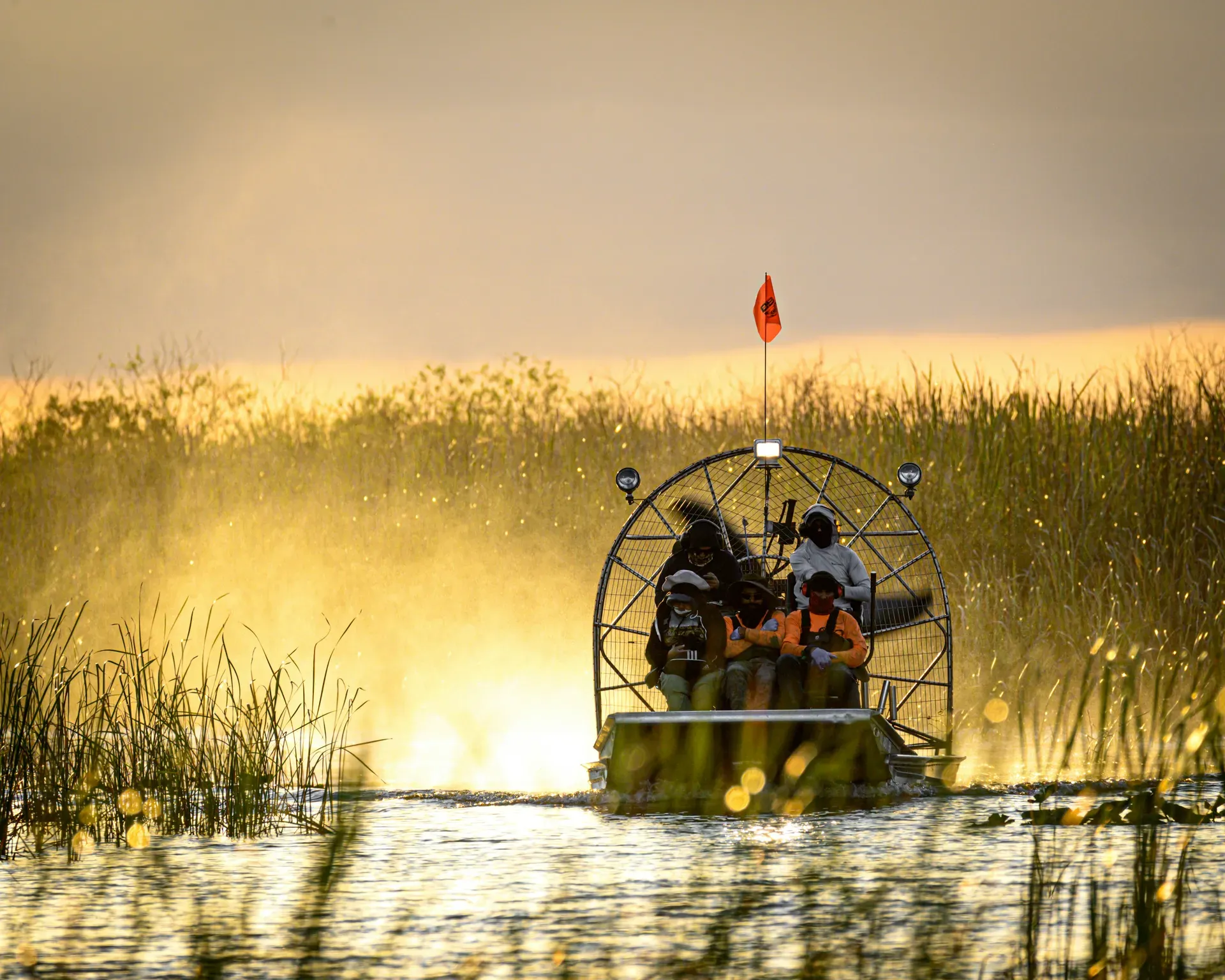
Everglades National Park is a massive subtropical wilderness located at the southern tip of Florida. It protects a unique, interconnected ecosystem of wetlands and marine habitats that provide a sanctuary for 36 endangered species.
Everglades National Park protects 1,508,976 acres of subtropical wetlands at the southern tip of Florida, located roughly 40 kilometers southwest of Miami. Nine interconnected ecosystems—ranging from hardwood hammocks to marine estuaries—stretch across a flat limestone seabed. Water flows slowly southward from Lake Okeechobee down to Florida Bay, creating a massive, shallow river of sawgrass. Thirty-six endangered species, including the Florida panther, West Indian manatee, and American crocodile, rely on this specific habitat for survival.
Visitors step onto elevated boardwalks directly over freshwater sloughs. Wild alligators sun themselves on muddy banks just feet from the paved Anhinga Trail. Wading birds like herons, egrets, and roseate spoonbills spear fish in the shallow water. The air feels heavy and humid, carrying the scent of decaying vegetation and salt spray near the coastal mangroves. Mosquitoes swarm aggressively during the wet season from May to November, forcing hikers to wear long sleeves and heavy repellent. The dry season, running from December through April, drops the humidity and concentrates wildlife around remaining water holes.
The park holds three major international designations: a UNESCO World Heritage Site, a Biosphere Reserve, and a Ramsar Wetland of International Importance. It contains the largest continuous stand of sawgrass prairie in North America and the most significant breeding ground for wading birds on the continent. South Florida residents depend on this exact watershed, as the slow-moving sheet of water recharges the Biscayne Aquifer, providing drinking water to millions.
Three main entrances provide access to completely different sections of the reserve. The Ernest F. Coe Visitor Center in Homestead leads to the Royal Palm area, the Gumbo Limbo Trail, and the Flamingo marina at the southern extreme. Shark Valley sits along the Tamiami Trail to the north, offering a 15-mile paved loop into the deep sawgrass. The Gulf Coast Visitor Center in Everglades City serves as the gateway to the Ten Thousand Islands. These entrances do not connect internally. You must drive outside the park boundaries to travel between them, often taking over an hour. Standard entry costs $35 per vehicle, and you should buy a digital pass online to skip the long winter lines at the Homestead entrance.
Human presence in the South Florida wetlands dates back 15,000 years. Paleo-Indians hunted across a drier, cooler landscape before the climate shifted at the end of the last Ice Age. Archaic peoples adapted to the rising water levels 6,500 years ago, establishing semi-permanent settlements on elevated tree islands. They left behind complex shell mounds, bone tools, and pottery fragments across 200 known archaeological sites within current park boundaries. The Calusa and Tequesta tribes dominated the region before European contact. Seminole and Miccosukee tribes retreated into these dense swamps during the 19th-century Seminole Wars. The harsh terrain, filled with sharp sawgrass and deep sloughs, provided a natural fortress against pursuing U.S. military forces.
Developers viewed the wetlands as a useless swamp throughout the late 1800s and early 1900s. Politicians promised to drain the land for agriculture and urban expansion during the Florida land boom. Engineers carved 150 miles of levees and deep canals through the sawgrass, fundamentally altering the natural hydrology. The construction of the Tamiami Trail in the 1920s created a physical dam across the state, blocking the southward flow of water. Water levels plummeted drastically. Wading bird populations crashed as their historical nesting grounds dried up, and massive peat fires burned across the exposed soil, sending thick smoke over Miami.
Ernest F. Coe recognized the ecological collapse and pitched the idea of a protected national park in 1928. He formed the Tropical Everglades National Park Association to lobby the federal government. Congress approved the designation in 1934, but land acquisition disputes and Great Depression funding delays stalled the project for over a decade. President Harry Truman finally dedicated Everglades National Park on December 6, 1947, in a ceremony held in Everglades City.
That same year, Marjory Stoneman Douglas published The Everglades: River of Grass, changing public perception of the region from a stagnant swamp to a vital, flowing ecosystem. Conservation efforts now focus on undoing 20th-century drainage projects. The Comprehensive Everglades Restoration Plan, authorized in 2000, aims to remove old levees and restore the natural southward flow of water from the Kissimmee River. Check the Shark Valley entrance hours before visiting, as the gates lock firmly at 6:00 p.m. daily.
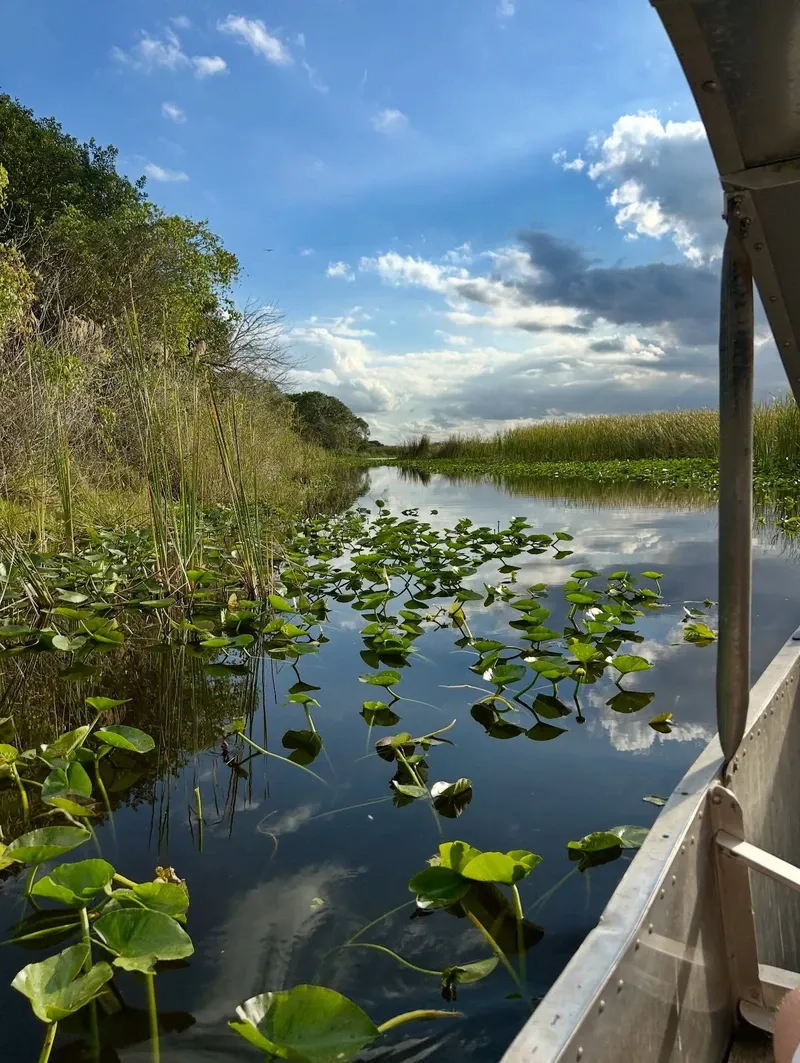
A highly active limestone substrate forms the foundation of the Everglades. This porous rock sits just inches below the surface, covered by a thin layer of peat and marl soil. The terrain remains almost entirely flat. Water moves across this 1,508,976-acre seabed at a glacial pace, dropping only two inches per mile as it travels from central Florida to the southern coast. This slow-moving sheet creates the defining river of grass, a massive expanse of sharp-edged sawgrass growing directly out of the shallow water in the Shark River and Taylor Sloughs.
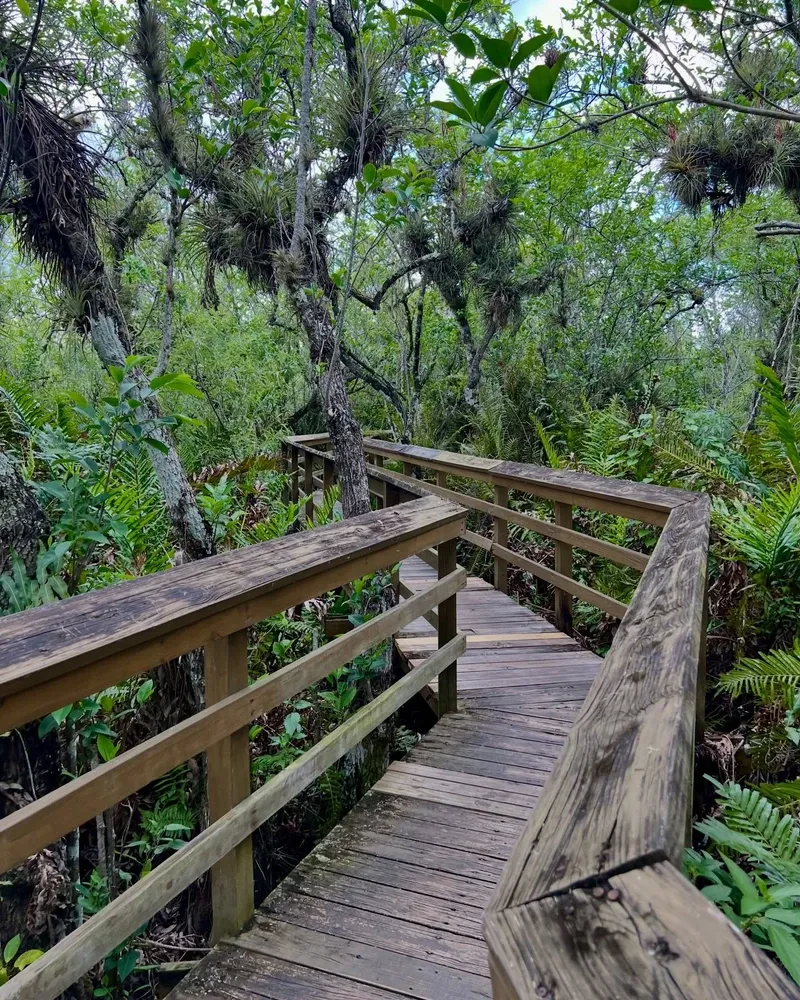
Nine distinct ecosystems transition rapidly based on elevation changes of just a few inches. Hardwood hammocks grow on slight limestone ridges, supporting dense canopies of tropical trees. The Mahogany Hammock Trail takes visitors through one of these jungle-like islands, showcasing the largest living mahogany tree in the United States. Pinelands require frequent, low-intensity fires to clear underbrush and open pinecones for seeding. Coastal lowlands give way to the largest mangrove ecosystem in the Western Hemisphere. These salt-tolerant trees prop themselves up on tangled stilt roots, filtering water and providing a nursery for juvenile marine life.
The transition from freshwater to saltwater dictates the wildlife you encounter. Alligators dominate the freshwater sloughs, lying motionless on the banks of the Anhinga Trail. American crocodiles hunt in the brackish waters of Coot Bay and the Buttonwood Canal near Flamingo. This geographic overlap makes the Everglades the only place on Earth where both species coexist in the wild. Further south, the Florida Bay marine environment features shallow, aquamarine waters where West Indian manatees and dolphins swim among seagrass beds. Backcountry boat tours from the Flamingo Marina venture deep into Tarpon Creek, providing a safe way to observe this transition zone.
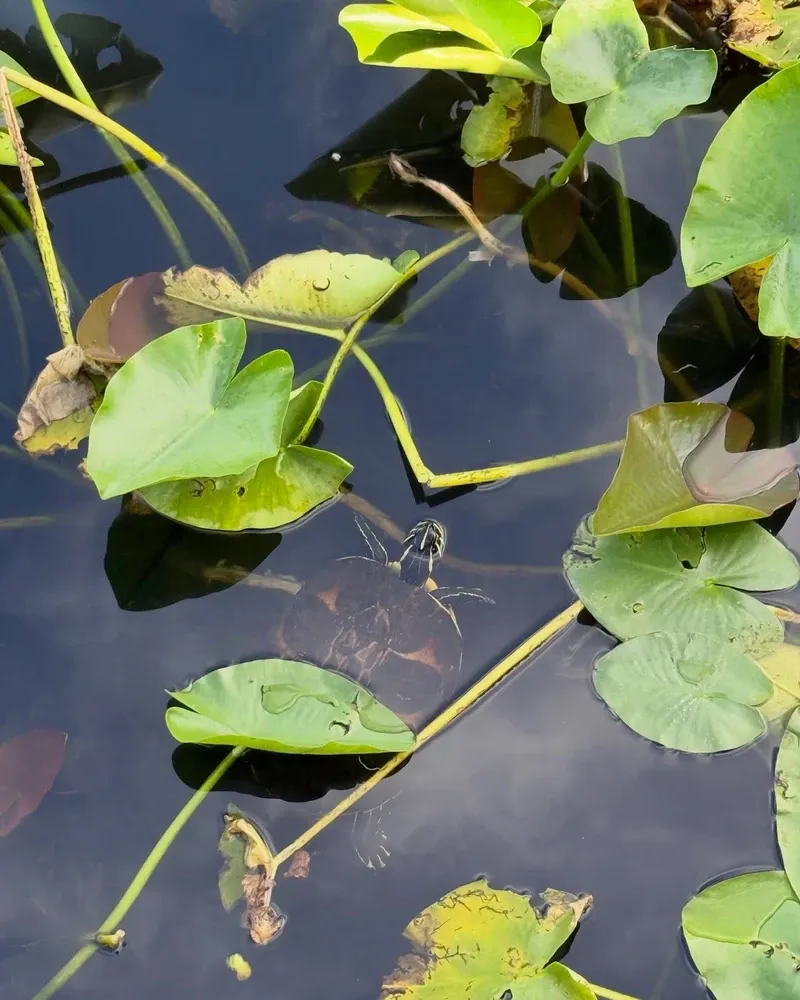
Water levels fluctuate drastically between the dry and wet seasons. During the winter dry season, water recedes into deeper limestone depressions called gator holes. This process concentrates fish, turtles, and birds into small, highly visible areas. Summer rains flood the prairies entirely, dispersing wildlife across a million acres. A 45-foot observation tower at Shark Valley allows visitors to look down over this vast, flat expanse. Bring a telephoto lens to photograph animals safely from the required 15-foot distance.
Indigenous communities maintain deep physical and spiritual ties to the Everglades. The Miccosukee and Seminole tribes survived the 19th century by adapting to the deep sloughs and hardwood hammocks. They built chickees—open-sided structures with palmetto-thatched roofs and cypress logs—on elevated tree islands to stay above the seasonal floods. Today, these tribes continue to live in and around the park. They operate authorized airboat concessions along the Tamiami Trail and preserve traditional practices like patchwork sewing and alligator wrestling on nearby reservation lands.
Literature and environmental advocacy transformed the region's cultural identity. Marjory Stoneman Douglas coined the term River of Grass in 1947, shifting the national narrative. Before her book, politicians and land developers viewed the wetlands solely as a drainage project to be conquered. Her writing established the Everglades as a fragile, interconnected watershed requiring immediate federal protection. The Marjory Stoneman Douglas Visitor Center stands today as a physical marker of her influence on American conservation.
The ecosystem directly supports modern human survival in South Florida. The porous limestone of the Biscayne Aquifer sits directly beneath the park. As the slow sheet of water moves south, it filters through the rock and recharges this massive underground reservoir. Millions of residents in Miami, Fort Lauderdale, and surrounding counties draw their daily drinking water from this exact source.
Early pioneers also left their mark on the landscape. The Museum of the Everglades in Everglades City details the brutal labor required to build the Tamiami Trail through the swamp. Nearby, the historic Everglades Rod & Gun Club hosted several U.S. presidents and offers a glimpse into the rugged 1920s frontier life. Visitors driving the 40 miles from Miami to the Ernest F. Coe Visitor Center cross the exact watershed that sustains the city.
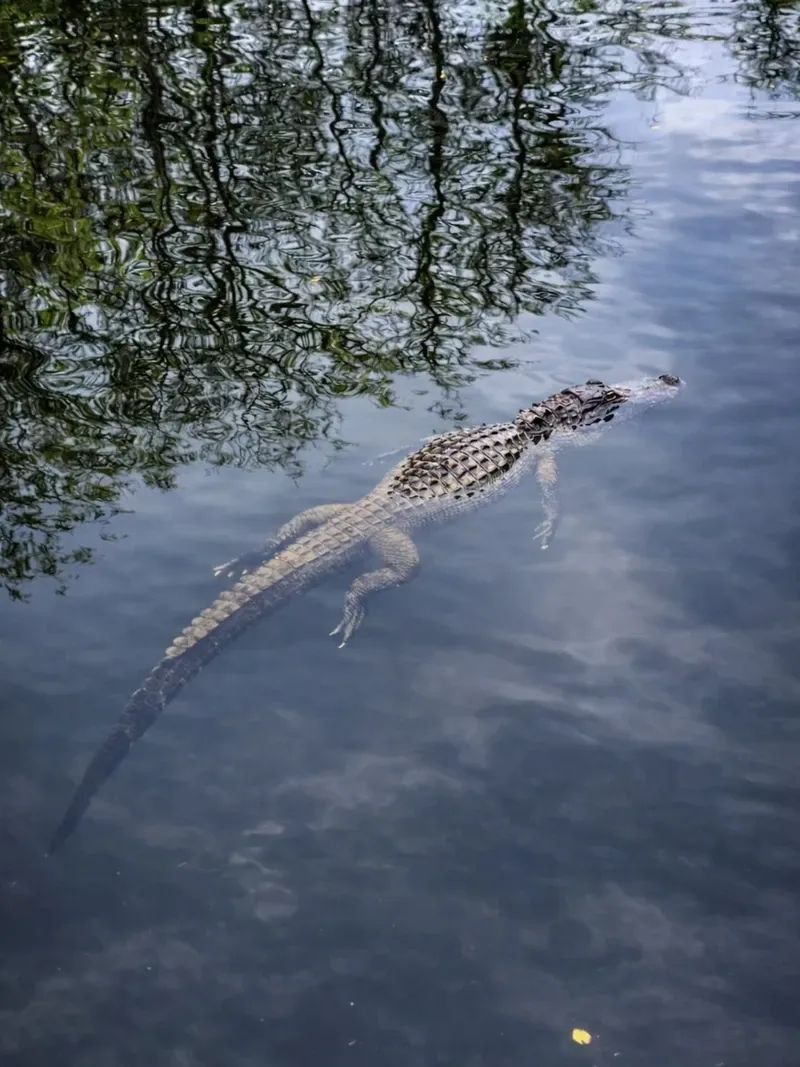
The Everglades is the only place on Earth where alligators and American crocodiles coexist in the wild.
The park contains the largest continuous mangrove ecosystem in the Western Hemisphere.
Water moves across the park at a glacial pace, dropping only two inches per mile.
All unmanned aircraft are strictly prohibited to protect wildlife and visitor peace.
The slow-moving water recharges the Biscayne Aquifer, supplying millions of South Florida residents.
The Mahogany Hammock Trail features the largest living mahogany tree in the United States.
Archaeological records show human presence in the region dating back 15,000 years.
Yes, the Everglades is the only place in the world where alligators and crocodiles coexist in the wild. Alligators prefer the freshwater marshes, while American crocodiles are typically found in the saltwater and brackish coastal areas near Flamingo.
The standard entrance fee is $35.00 per private vehicle, $30.00 per motorcycle, and $20.00 per pedestrian or cyclist, valid for 7 consecutive days. Starting January 1, 2026, non-U.S. residents ages 16 and over must pay an extra $100.00 nonresident fee.
There are no traditional indoor lodging facilities currently available inside the park, though the Flamingo area features the Flamingo Lodge and houseboats. Visitors can camp at the Long Pine Key and Flamingo campgrounds, or utilize backcountry wilderness sites.
No, drones and all other unmanned aircraft are strictly prohibited in Everglades National Park and all other National Park Service sites. This ban includes model airplanes, quadcopters, and any other remote-controlled flying devices.
Swimming, snorkeling, and diving are strictly prohibited in all canals, ponds, freshwater lakes, marked channels, and boat basins inside the park. These waters host dangerous predators like alligators, crocodiles, and venomous snakes.
Yes, wilderness camping permits are required for all backcountry sites and must be reserved online through recreation.gov. The permits cost a $21.00 administrative fee plus an additional use fee of $2.00 per person, per night.
Pets are allowed in designated areas like parking lots and on a leash, but they are prohibited on most park trails. This rule is strictly enforced because wild predators like alligators and crocodiles may perceive small pets as prey.
The dry season, from December through April, is the best time to visit due to pleasant weather and lower humidity. This season concentrates wildlife around remaining water sources, making animals much easier to spot than during the wet summer months.
Yes, there are three authorized airboat concessionaires operating inside the park boundaries along the Tamiami Trail. These official operators are Coopertown Airboats, Everglades Safari Park, and Gator Park.
The park's three main entrances—Ernest F. Coe in Homestead, Shark Valley in Miami, and Gulf Coast in Everglades City—do not connect internally. Visitors must drive outside the park to travel between them, with each entrance located at least a one-hour drive apart.
Browse verified tours with free cancellation and instant confirmation.
Find Tours